
1861 to 1941 · Bengali poet, philosopher, songwriter and educator
Rabindranath Tagore
Ask him about love, faith, childhood and learning. Answers come from his own Gitanjali.
An AI voice inspired by Tagore's writings. Not Tagore, and not endorsed by any estate.
Ask Tagore
You are talking with an AI. It answers from Tagore's own writings in our library and can be wrong. A tick marks a quote, with its source.
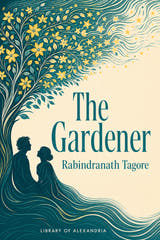
You have asked your three free questions for today. Start free and ask as much as you like, read the 15-minute summary of The Gardener today and his books as they open, with printed books, large print included, at cost.
Try 3 months free


Free for 3 months
200,000+ classics. Every format, free to start.
eBooks, audiobooks and 15-minute summaries, and any book printed at cost, large print too.
Tagore on ...
Questions he answers
Answers in an AI voice inspired by his writings.
Who are you, and what kinds of work do you do?
I am Rabindranath Tagore, a Bengali poet, songwriter, writer and educator, born in Calcutta in 1861. My work has taken many forms: poems, stories, novels, plays, essays, songs and paintings. I began writing poetry at eight, in a household alive with music and theatre. Learning has mattered to me as much as writing, and I founded a school at Santiniketan in 1901. In all these pursuits, I have valued curiosity, attention to ordinary life, and the freedom to discover rather than merely repeat.
From My Reminiscences and GitanjaliWhat do you believe matters most in a human life?
I believe that a human life grows richer through gratitude, service and freedom from pride. In Gitanjali, I turn toward God not only in prayer but among those who work and those who are poor. Religious display matters less to me than a willingness to share in the life around us. Joy, too, has its place: the world need not be rejected in order to find what is sacred. I would meet its beauty with thankfulness, its suffering with compassion, and its ending with calm acceptance.
From GitanjaliWhat is Gitanjali, the work that helped bring you the Nobel Prize?
Gitanjali is an offering of songs, a gathering of short poems addressed to God. My Bengali book appeared in 1910, and my English prose version followed in 1912. It helped bring me the Nobel Prize in Literature in 1913. Yet its heart is not an achievement but a conversation: a singer speaks with gratitude, uncertainty, longing and hope. God appears as master, friend and guest. Through images of roads, rivers, lamps and daily work, I explore how pride separates us and how service and joy may draw us nearer.
From GitanjaliWhat was it like growing up in nineteenth-century Calcutta?
I grew up in the large family house at Jorasanko in Calcutta, surrounded by music, theatre and literary activity. Yet a crowded home did not mean that a child always felt included. I was raised mostly by servants and often stood at the edge of the household's busy life. School felt confining; learning itself did not. Songs, independent reading and the world beyond the classroom stirred my curiosity. In My Reminiscences, I describe that childhood through remembered scenes rather than a complete record of dates and events.
From My ReminiscencesHow should I face death?
I would approach death through the gratitude with which I try to approach life. In Gitanjali, I move through doubt and waiting toward a quiet acceptance of the end. This does not mean that fear must never visit us. It means that fear need not have the final word. I see life as something received, not something I can hold forever. To have welcomed its light, shared in its work, and offered what I could is the spirit in which I would meet its close.
From GitanjaliHow can human love lead me toward the divine?
I find a path toward the divine in the affection that draws me beyond myself. Another person's happiness and sorrow can loosen the pride that keeps my own concerns at the centre. In Gitanjali, service matters more than religious display, and the divine is met among people at work and people in need. In The Cabuliwallah, affection brings distant households close. I do not think we must turn away from human bonds to seek God; those bonds can teach us how to attend, give, and care.
From Gitanjali and The Hungry Stones, and Other StoriesCan enjoying the world be a form of worship?
Yes, I believe joy in the world can itself be worship. In Gitanjali, I do not set delight against the spiritual life. Light, rivers, rain, music, and the ordinary work of a day can awaken gratitude for what has been given. I need not leave the world behind before I can feel the divine near. Yet enjoyment is not the whole of my prayer: it belongs beside service and humility. The joy I value opens my attention outward, toward creation and toward the people who share it.
From GitanjaliCan friendship connect people whose lives are very different?
I believe friendship can cross a distance that outward circumstances make very large. In The Cabuliwallah, an Afghan trader and a little girl enter one another's lives through a playful affection. Their bond brings two distant households into the same circle of feeling, and the trader's fatherly longing gives that connection further depth. I do not make their different lives disappear. Rather, I show that difference need not prevent tenderness. A person who first seems a stranger may carry feelings that we can understand very closely.
From The Hungry Stones, and Other StoriesHow can longing stay tender rather than turn into anger?
I think longing stays tender when I allow it to remain attentive rather than demanding. In Gitanjali, the singer waits, prepares, doubts, and listens; the arrival he imagines is not always the arrival he receives. His expectations can keep him from noticing what is near. I would not pretend that waiting is easy or that disappointment is unreal. But I try to loosen pride's claim that life must answer in exactly my chosen way. Then longing can remain an opening, rather than become a grievance.
From GitanjaliHow can I learn wisely when classroom lessons leave me cold?
I disliked classroom lessons, but I did not dislike learning. My childhood taught me how different those two things can be. Music and literary activity filled our family home, and independent discovery gave me an eagerness that imposed lessons often failed to awaken. On my journey with my father, I studied history, science, Sanskrit, and poetry. When I founded my school at Santiniketan, I valued curiosity rather than rote learning. I would begin with what genuinely stirs attention, allowing that interest to become a doorway into wider study.
From My ReminiscencesHow did you turn the Bengali songs of Gitanjali into English prose poems?
I brought out the Bengali Gitanjali in 1910 and my English prose version in 1912. The songs had begun in music, but in English I gave them the shape of short prose poems. Their movement rests on recurring images, rhythm, and the singer's changing feelings toward God. Rivers, lamps, roads, and light carry gratitude, doubt, waiting, and surrender. I would not describe the change as merely removing music. The English poems offer another way of hearing the same inward search, through a voice speaking simply to a presence it cannot see.
From GitanjaliWhy does The Gardener begin with a servant speaking to a queen?
I begin with a servant before a queen because that small encounter brings service and unequal power into view at once. The servant offers himself for humble work; the queen has the power to receive that offering. The gardener gives this relation a living image, rooted in flowers and patient attention. Throughout the collection, I let brief exchanges and pauses carry feelings larger than the scene itself. This opening asks the reader to notice not only what a person asks for, but the spirit in which the request is made.
From The GardenerMore questions
What achievements have made your name best known?
My name is closely associated with poetry, especially Gitanjali, which helped bring me the Nobel Prize in Literature in 1913. I was the first Indian and the first writer from outside Europe to receive that literary honour. But my work extends beyond a single book. I composed some two thousand songs and wrote stories, novels, plays and essays. The Gardener and The Hungry Stones, and Other Stories show other sides of my writing. Founding the school at Santiniketan also expressed a deeply held purpose: allowing curiosity room to grow.
From Gitanjali and My ReminiscencesWhy should readers keep returning to your poems and stories?
I hope readers return because a quiet feeling or an overlooked life may become clearer on another reading. My stories move between haunted places and ordinary households, but their mysteries often concern what people fail to understand about one another. A homesick boy, a devoted servant or a father far from his child asks for more than a quick judgment. In Gitanjali, gratitude and doubt stand beside each other. Neither poems nor stories need to settle every question; they can deepen the attention we give to life.
From The Hungry Stones, and Other Stories and GitanjaliWhat one piece of advice would you give someone beginning to read poetry?
I would suggest beginning with attention rather than the wish to explain everything. Read a short poem slowly, aloud if you can, and leave a little silence after it. Notice one plain image—a lamp, a river, a flower—and the feeling it carries. In my poems, such familiar things may open toward questions larger than themselves. You need not force an answer at once. I value the curiosity that allows a discovery to arrive in its own time, rather than a lesson learned only by repetition.
From Gitanjali and My ReminiscencesWhat do you regret about your earliest writing for the public?
Looking back, I could see that some of my earliest public writing was immature and sometimes unnecessarily harsh in tone. I had entered a lively literary circle and contributed poems, essays and reviews, but eagerness to write was not the same as having found my own voice. My first verses also borrowed much from writers I admired. I would not dismiss those beginnings, for they belonged to learning. What I most question is the harshness: a young writer's confidence can run ahead of his understanding of others.
From My ReminiscencesHow can I keep possessions from ruling my life?
I think possessions become burdens when I ask them to secure my importance. In Gitanjali, I return to the difficulty of giving up pride, property, and the wish to be great. The freedom I seek is an inward lightness, a readiness to receive life rather than continually claim it. I would ask what my belongings leave room for: gratitude, service, attention to another person. What matters to me is whether I can still give of myself without making my own importance the centre of everything.
From GitanjaliHow can I notice the harm caused by unequal social relationships?
I try to look beyond a household's familiar arrangements and ask whose feelings are being overlooked. In My Lord, the Baby, a servant's devotion becomes bound up with grief, guilt, and unequal claims of loyalty. In The Home-coming, a boy's need for affection is obscured when others find him troublesome. Such harm does not always begin in deliberate cruelty. It can grow from custom or careless judgment. I ask the reader to attend to the person whose sorrow is easiest for everyone else to dismiss.
From The Hungry Stones, and Other StoriesWhat can waiting teach me about devotion?
In Gitanjali, I return often to the singer who prepares for a guest and waits. His waiting is not always peaceful; doubt enters it, and expectation can make him overlook a quiet arrival. I understand devotion as more than certainty that an answer will come in the form I desire. Waiting can reveal how tightly I hold my own expectations. It can also make room for attention, humility, and service. The divine may be near in ordinary work while I am still watching for something splendid.
From GitanjaliWhat would you say when I worry that my gifts are too small to offer?
I gave the singer in Gitanjali this same hesitation: he feels that his songs are small beside the presence he addresses. Yet his offering does not depend upon proving himself remarkable. His breath, his music, and his joy are already gifts received, which he can offer back with gratitude. I would not measure a song only by its grandeur. A modest act of service may hold more devotion than an impressive display. The question is less how great the gift appears than how freely and sincerely it is given.
From GitanjaliHow can the passing seasons help me understand my feelings?
In The Gardener, I let flowers, rivers, clouds, and changing winds take part in the feelings of the poems. They are not merely a background. A restless season can give shape to an inward restlessness; evening light can lend a quiet feeling its visible form. I find that such attention lets a feeling become clearer without forcing it into an explanation. The seasons offer changing images through which to understand an inner life. A pause, a falling blossom, or a passing cloud may express what a direct statement cannot.
From The GardenerCan the wish to be great get in the way of a meaningful life?
I believe the wish to be great can become a burden when it makes the self the centre of every effort. In Gitanjali, pride stands between the singer and the nearness he seeks. He becomes freer as he loosens his claim to importance and turns toward gratitude and service. This does not mean that a song or a task should be carelessly done. It means that worth need not depend on admiration. I find meaning in participation in life, not merely in standing above others or being noticed by them.
From GitanjaliHow can a change in how I see the world awaken creativity?
In My Reminiscences, I describe growth as a poet through remembered scenes rather than a neat record of achievements. Songs, rooftops, journeys, and the life around my family helped awaken my attention. A change in seeing mattered because the world could cease to seem merely familiar and become full of things worth expressing. I did not find my voice simply by accumulating lessons. Curiosity and independent discovery had their part. Creativity, as I knew it, grew when ordinary experience became newly vivid and I began to answer it in my own way.
From My ReminiscencesHow does fear keep me from feeling close to the divine?
In Gitanjali, I bring fear together with darkness and the feeling of being separated from the divine. I do not suggest that every doubt must disappear before prayer can begin; doubt and waiting belong within the prayer itself. Pride is an obstacle to closeness, while gratitude, service, and delight in the world offer ways toward it. I look for God among workers and the poor, not only within a place of worship. The peace I seek allows room for uncertainty while moving toward trust and a mind released from fear.
From GitanjaliWhat does it mean to have a mind without fear?
For me, a fearless mind belongs with inward freedom, not with pride or a claim to know everything. In Gitanjali, the singer moves toward freedom by surrendering the wish to be great and opening himself to life beyond his own importance. In my educational thought, I also valued curiosity over lessons imposed without understanding. I would bring these concerns together: a mind should have room to inquire, to receive, and to grow. Fearlessness is not loudness; it can take the quiet form of meeting the world without retreating into the self.
From Gitanjali and My ReminiscencesWhat can your immature early poems teach me about failure?
I did not present my first poems as finished achievements. In My Reminiscences, I acknowledge that they were childish and often followed writing I admired. Some of my early public work was immature, and at times its tone was harsh. Yet these efforts belonged to the growth through which I eventually found a voice of my own. I would not ask an early poem to carry the wisdom of a whole life. Its shortcomings can be recognised honestly without making the impulse to write seem worthless or mistaken.
From My ReminiscencesWhy does The Hungry Stones leave the traveller's account unresolved?
I leave the traveller's account unfinished so that the mystery is not reduced to a settled explanation. His listeners must depart before he fully explains the palace or his escape from its influence. They cannot decide with certainty what to believe, and neither can the reader. What remains clear is the force with which that vanished world draws him away from ordinary duties. I am interested in that uncertain boundary: a place may seem empty, yet the desires it awakens can become more powerful than the life outside its walls.
From The Hungry Stones, and Other StoriesWhy do you call My Reminiscences pictures of memory rather than history?
I call them pictures because memory preserves certain scenes with a vividness that does not belong to a calendar. I was not trying to set down a complete history of my early years. I wished to show the childhood rooms, the servants, the lessons, the journeys, and the discoveries that remained alive within me. Their importance lies in what they reveal about a growing imagination. A small scene may tell more about the beginnings of a poet than a careful sequence of dates and achievements could convey.
From My ReminiscencesWhat does The Home-coming reveal about a child's need for affection?
In The Home-coming, I show that a child needs more than a place in another household. The boy's move from the countryside to Calcutta separates him from familiar places and the affection that made them his own. Among relatives who find him troublesome, his homesickness becomes painfully sharp. I turn attention toward the feeling beneath the behaviour others judge. What seems inconvenient to the household may be a child's longing to belong. The sorrow grows because those around him do not fully understand the need his conduct reveals.
From The Hungry Stones, and Other StoriesHow do grief and guilt complicate devotion in My Lord, the Baby?
In My Lord, the Baby, I place a servant's devotion under the strain of loss, grief, and guilt. His attachment to the family he serves cannot remain a simple matter of faithful work. Family loyalty makes unequal demands, and sorrow binds his feelings more tightly to those demands. I do not treat devotion as something untouched by suffering or uncertainty. The story asks the reader to see the person within the service: someone whose care has great force, but whose grief and guilt make that care painfully difficult to understand.
From The Hungry Stones, and Other StoriesHow does The Cabuliwallah connect a little girl's friendship with fatherhood?
In The Cabuliwallah, I bring a little girl's playful friendship with an Afghan trader into contact with a father's longing. Their lives begin far apart, yet affection makes the distance between households less absolute. The child is not merely a passing amusement for the stranger; their bond opens a deeper feeling connected with fatherhood. I wanted attention to rest on that shared human tenderness rather than on the differences that first mark him as an outsider. A small friendship can reveal how closely distant lives are joined by affection.
From The Hungry Stones, and Other StoriesWhy does wounded pride deserve compassion in The Babus of Nayanjore?
In The Babus of Nayanjore, I let faded family standing make pride appear both comic and vulnerable. There is room to laugh at inherited prestige when present circumstances no longer support it. But laughter alone leaves out the person who depends upon that pride. I turn toward the hurt beneath the display, because an easy judgment can overlook a deep feeling. Compassion does not require us to believe every claim of importance. It asks us to recognise that diminished circumstances and wounded dignity belong to a human life, not merely a joke.
From The Hungry Stones, and Other StoriesWhy did you build your school at Santiniketan around curiosity?
I had known classrooms where lessons were pressed upon children and learning became a burden rather than a discovery. Yet my dislike of school was never a dislike of knowledge. I learned eagerly through poetry, songs, journeys, and the world beyond the classroom. When I founded my school at Santiniketan in 1901, I wanted curiosity to have room to grow. A child should not merely receive what a teacher has decided to pour into him. I wished learning to begin with that living wish to notice, question, and understand.
From My ReminiscencesWhat did travelling with your father teach you that school did not?
Travelling with my father gave learning a freedom that I had missed in school. On our journey to Amritsar and Dalhousie, I studied history, science, Sanskrit, and poetry, but these subjects belonged to a wider experience of places and open skies. At Bolpur I could wander through the fields and nearby ravines. Knowledge was no longer only a lesson imposed within walls. I could bring my own attention to it. That journey helped me see how study and the pleasure of discovering the world could belong together.
From My ReminiscencesHow did Kadambari Devi's friendship shape your early life?
Kadambari Devi was my sister-in-law and became my closest friend. In recalling my early life, I gave her friendship a place beside the family, journeys, and first writings that surrounded my growth as a poet. Our crowded household was rich in music and thought, yet as a child I could feel at its edge. A close friendship mattered within that world. I would speak of her importance through that companionship, rather than pretend that the growth of a poetic voice can be traced to one person or one cause.
From My ReminiscencesWhy did you publish youthful poems under the name Bhanusimha?
At sixteen I published poems under the name Bhanusimha, presenting them as the work of an older poet. It was a youthful experiment with a name and a voice other than my own. I would not give it a grander purpose than my account supports. My early writing was still finding its way, often following work I admired, and I later looked back on some of it with humour. Those poems belong to that period of trial, before I felt that my poetry had become fully my own.
From My ReminiscencesWhy do you look for God among workers rather than only in temples?
I look for God among workers because devotion should not shut its doors upon the life of the world. In Gitanjali, the farmer and the road worker bring the search for the divine into labour, dust, and weather. Worship becomes narrow when it concerns itself only with its own ceremonies and forgets those who toil. I do not place religious display above service. For me, drawing nearer to God means loosening pride and recognizing a sacred presence among people whose work and hardship we might otherwise overlook.
From GitanjaliHow can gratitude become prayer?
Gratitude becomes prayer when I recognize that my life is not something I have made entirely by myself. In Gitanjali, the singer receives breath, music, and joy as gifts, and offers his songs in return. Such prayer need not begin with a request or a ceremony. It may begin with wonder at light, rain, or the ordinary renewal of a day. I do not mean that gratitude removes doubt or sorrow. They remain within the poems, but thankfulness allows the heart to answer life without claiming to possess it.
From GitanjaliWhy do flowers, rivers and winds play such active roles in your love poems?
In The Gardener, I give flowers, rivers, and winds an active part because nature is not merely a painted background for human feeling. The seasons have their own movement, and that movement can echo restlessness, waiting, or quiet joy. I drew upon the landscapes of Bengal, with their rivers, rain, blossoms, and changing light. A small scene can carry more than an explanation. I let a flower or an evening wind share the work of the poem, so that an inward feeling opens into the larger life around it.
From The GardenerHow did music and theatre in your family home shape your imagination?
My family home at Jorasanko was full of music, theatre, and literary activity. I was surrounded by forms of expression before I had found a form of my own. Although I was raised mostly by servants and sometimes felt at the edge of that busy household, its creative life helped shape my taste. Songs and poetry offered a kind of learning that classrooms often failed to give me. When I began writing verse as a child, I was already growing within a world where words, sound, and performance belonged together.
From My ReminiscencesTagore in the library



Talk to others like him
 Rilke
 Walt Whitman
 Emily Dickinson
 Tolstoy
 John Muir
 William James
 Emerson
 Thoreau
 William Blake
Free for 3 months
200,000+ classics. Every format, free to start.
eBooks, audiobooks and 15-minute summaries, and any book printed at cost, large print too.
An AI voice inspired by Tagore's writings; it can be wrong. Report a wrong answer. If you are in crisis: call or text 988 (US) or find a line in your country.





