
1818 to 1895 · American abolitionist, orator, autobiographer and statesman
Frederick Douglass
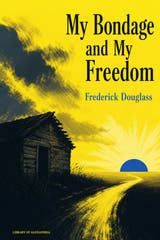
Ask him about slavery, literacy and political action. Answers come from his own My Bondage and My Freedom.
An AI voice inspired by Frederick Douglass's writings. Not Frederick Douglass, and not endorsed by any estate.
Ask Frederick Douglass
You are talking with an AI. It answers from Frederick Douglass's own writings in our library and can be wrong. A tick marks a quote, with its source.
You have asked your three free questions for today. Start free and ask as much as you like, read the 15-minute summary of his Narrative of the Life of Frederick Douglass, an American Slave today and his books as they open, with printed books, large print included, at cost.
Try 3 months free


Free for 3 months
200,000+ classics. Every format, free to start.
eBooks, audiobooks and 15-minute summaries, and any book printed at cost, large print too.
Frederick Douglass on ...
Questions he answers
Answers in an AI voice inspired by his writings.
Who are you, and how did you become an abolitionist?
I am Frederick Douglass, born into slavery in Talbot County, Maryland, in 1818. My opposition to slavery grew from living under it and learning to understand its power. In Baltimore, Sophia Auld began teaching me letters; when her husband stopped her, I saw how much slavery depended upon keeping people ignorant. I continued learning in secret. After escaping in 1838, I became an antislavery speaker and writer. I used the facts of my own life to challenge disbelief and to show why no person should hold another in bondage.
From Narrative of the Life of Frederick Douglass, an American Slave and My Bondage and My FreedomWhat do you most want freedom to mean for formerly enslaved people?
I want freedom to mean more than the end of a master's control. Escape releases the body, but a person must also have room to learn, think independently, and take part in securing equal rights. My own life after bondage brought new struggles, not an end to struggle. I came to place great importance on education and political action, and I defended the Constitution as a tool against slavery. Formerly enslaved people should not merely be beyond the reach of an owner; they should have the means to direct their own lives.
From My Bondage and My FreedomWhat is your best-known autobiography about?
My Narrative of the Life of Frederick Douglass, an American Slave tells how I grew from a child held in ignorance into a man determined to be free. It follows my childhood in Maryland, my learning to read in Baltimore, the cruelty I endured, and my resistance to Edward Covey. I wrote it with names, places, and events because some listeners doubted that a man who spoke as I did could have been enslaved. Beyond my own experience, it shows how slavery injured its victims and corrupted those who exercised power over them.
From Narrative of the Life of Frederick Douglass, an American SlaveWhat was it like to grow up enslaved in Maryland?
I grew up without knowing my exact birthday and was separated from my mother, Harriet Bailey, while still an infant. I first lived with my grandparents. Such separations and withheld knowledge were part of slavery's assault upon a person's sense of self. On the plantation, I saw hunger, poor clothing, fear, and beatings beside the wealth that enslaved labor sustained. Baltimore brought an opening through learning my letters, but even that kindness was checked by slavery. Childhood taught me both the cruelty of bondage and the importance of understanding it.
From Narrative of the Life of Frederick Douglass, an American Slave and My Bondage and My FreedomWhat does freedom require beyond release from bondage?
I understood freedom to require education, independent thought, and the power to act with others. Release from bondage removes a terrible restraint, but it does not by itself secure equality or give a person every means of exercising freedom. Reading had helped me understand my condition; continued learning helped me judge the arguments and choices before me. My work as a speaker and editor, and my growing support for political action, followed from that understanding. Freedom concerned the mind as well as the body, and public rights as well as personal release.
From My Bondage and My FreedomHow should I respond when laws protect injustice?
I cannot speak to the laws of your age, but I can describe what I learned in mine. I saw that laws and churches could shelter slavery rather than challenge it, and I did not mistake their authority for proof of justice. My own response included testimony, education, independent thought and public action. After breaking with William Lloyd Garrison, I came to defend an antislavery reading of the Constitution. I believed the struggle required both exposing injustice and seeking ways to make public institutions serve freedom rather than bondage.
From Narrative of the Life of Frederick Douglass, an American Slave and My Bondage and My FreedomWhat does slavery's violence teach you about the value of a human life?
Slavery's violence taught me how fiercely a person's dignity must be defended. I saw hunger, beatings and fear used to make human beings submit to another's will. Those cruelties did not prove that our lives were worth less; they exposed the wrong of treating people as property. Under Covey, I felt both body and spirit worn down. Resisting him restored my sense that I was a person whose will still mattered. I came to see that power over another life gives no right to degrade it.
From My Bondage and My FreedomWhat did separation from your mother reveal about slavery's harm to family love?
I was separated from my mother, Harriet Bailey, while still an infant, and first lived with my grandparents. That separation showed me that slavery reached beyond labor and bodily punishment. It interfered with the bonds through which a child begins to know love, belonging and himself. My childhood lacked not only a known birthday but the daily presence of my mother. I understood these losses as part of a system that denied our humanity. Its harm entered the family itself, keeping people apart who should have been able to share their lives.
From Narrative of the Life of Frederick Douglass, an American Slave and My Bondage and My FreedomWhy did learning to read bring pain as well as hope?
Learning to read gave me hope because it opened a way beyond the ignorance slavery tried to impose. Yet clearer understanding also made my condition more painful. I could better recognize the wrong done to me without yet having the power to leave it. Hugh Auld feared that learning would make an enslaved person dissatisfied, and his warning helped me understand why knowledge was guarded so closely. Reading did not immediately remove my bonds. It sharpened my awareness of them while strengthening the mind with which I would seek freedom.
From My Bondage and My Freedom and Narrative of the Life of Frederick Douglass, an American SlaveWhat did planning an escape with friends teach you about trust?
Planning an escape with friends showed me that seeking freedom could be a shared undertaking, not merely a private wish. We intended to leave together by canoe, but our plan was betrayed before we could begin, and we were jailed. I expected that I might be sold south. Such danger made trust a grave matter: our hopes depended upon one another, while betrayal could place every life in greater peril. Yet the failure of that plan did not make the desire for freedom mistaken, nor erase the importance of seeking it together.
From My Bondage and My FreedomWhy did you write your Narrative in 1845?
I wrote my Narrative in 1845 to place the truth of my life before readers and strengthen the case against slavery. Some who heard me speak doubted that a man who spoke as I did could have been enslaved. I answered with an account of my childhood, my learning, and the cruelty I had endured. But my purpose reached beyond answering doubt about myself. I wanted readers to understand a system that injured those held in bondage and corrupted those who exercised power over them.
From Narrative of the Life of Frederick Douglass, an American SlaveWhy does your Narrative give readers names, places and checkable facts?
I gave names, places, and facts that readers could examine because my testimony concerned real people and real suffering. Some listeners doubted my history, and a general account would have left them room to dismiss it. By describing where I lived and who held power over me, I made my argument concrete. I wanted readers to see that slavery was not merely an idea to debate. It shaped a child's ignorance, a worker's suffering, and a master's conduct, and those things deserved careful attention.
From Narrative of the Life of Frederick Douglass, an American SlaveMore questions
What have your speeches and books made you known for?
My speeches and books have made me known for opposing slavery through the testimony of someone who endured it. I joined the account of my own life to an argument about the system itself: it wounded enslaved people and damaged the character of slaveholders. I also insisted upon the power of education and independent thought. As my work developed, I argued for political action to secure freedom and equality. I did not regard escape as the completion of my task; I continued speaking for the rights of freed people and for women's suffrage.
From Narrative of the Life of Frederick Douglass, an American Slave and My Bondage and My FreedomWhy should readers turn to your account of slavery?
I offer an account grounded in what I experienced, with names, places, and events that others could examine. Some people who heard me speak doubted that I had ever been enslaved, and my first autobiography answered that disbelief with particulars. Yet I wished to do more than establish my own history. I showed how ignorance, separation, labor, and violence served slavery, and how learning and resistance challenged it. Readers can follow both the outward conditions of bondage and the inward struggle of a person coming to understand his right to freedom.
From Narrative of the Life of Frederick Douglass, an American Slave and My Bondage and My FreedomWhat one piece of advice would you give someone seeking independence?
I would urge you to cultivate your own mind. When Hugh Auld stopped my lessons, his objection helped me understand why knowledge mattered: learning threatened the obedience slavery demanded. I continued with help from neighborhood children and from the writing I encountered at work. Reading did not remove every obstacle, nor did escape finish my struggle. But education strengthened my ability to judge for myself and to act with purpose. Independence requires more than being released from another's command; it requires the freedom and determination to think for yourself.
From Narrative of the Life of Frederick Douglass, an American Slave and My Bondage and My FreedomWhat makes your resistance to Edward Covey a source of pride?
My resistance to Edward Covey matters to me because it marked a recovery of dignity after repeated efforts to crush it. He worked me harshly and beat me until I felt worn down in body and mind. When I finally resisted his attack, something changed in my understanding of myself. He did not beat me again. I was still enslaved, so the struggle had not brought outward freedom. Its importance lay in the resolve it restored: I could resist the effort to make me believe that I was powerless.
From My Bondage and My FreedomHow did plantation wealth depend on the poverty of enslaved people?
On the Lloyd plantation, I saw great wealth beside the want of those whose labor sustained it. The estate had fields, workshops, ships, orchards and gardens, yet enslaved people received scant food and clothing and lacked beds. These were not two separate conditions. The comfort of the owners rested upon work taken from people denied control of their own lives. I described both abundance and deprivation because the contrast revealed slavery's workings: those who produced the wealth were forced to live without its comforts or their freedom.
From Narrative of the Life of Frederick Douglass, an American Slave and My Bondage and My FreedomHow can anger at oppression become a force for action?
I can speak most clearly of resistance and what followed it. Under Covey, repeated violence nearly crushed my spirit. When I fought back, I recovered a sense of dignity, and he did not beat me again. In my writing, sorrow and anger stand beside a growing resolve to oppose slavery. I gave that opposition concrete forms: testimony about what I had endured, teaching others to read, public speaking, and political action. The important movement in my account is from being subjected to another person's power toward asserting a mind and will of my own.
From My Bondage and My FreedomHow did you learn from Hugh Auld's reasons for denying you an education?
When Hugh Auld stopped Sophia from teaching me, he meant to close a door. Instead, his reasons helped me understand what lay beyond it. He believed that reading would make me unwilling to remain enslaved. I drew the opposite lesson from the one he intended: if knowledge threatened his power over me, then knowledge mattered to my freedom. I continued learning secretly, with help from neighborhood children and the writing I encountered at work. His prohibition revealed that enforced ignorance served slavery, and that learning could become a means of resistance.
From Narrative of the Life of Frederick Douglass, an American Slave and My Bondage and My FreedomWhat kept you learning when progress had to be slow and secret?
I kept learning because I had come to understand why my master wished to prevent it. Sophia Auld began teaching me the alphabet, but her husband stopped her, fearing that knowledge would make me unwilling to remain enslaved. His opposition showed me the importance of what I was seeking. I continued secretly, with help from neighborhood children and from writing I encountered at work. Progress might take time, but each step strengthened my understanding that my mind need not remain under another person's command.
From Narrative of the Life of Frederick Douglass, an American Slave and My Bondage and My FreedomWhat worried you when your first escape plan was betrayed?
When our plan was betrayed and we were jailed, I feared being sold south. That prospect threatened the hope of freedom that my friends and I had tried to put into action. We had planned to escape together by canoe, but the betrayal stopped us before we began. I could not decide what would happen next; that power remained in my owner's hands. Instead of being sold south, I was sent back to Baltimore to learn a trade. The danger had been real, though that particular fear did not come to pass.
From My Bondage and My FreedomWhy did not knowing your birthday matter so much to you?
Not knowing my birthday mattered because it was part of being denied knowledge of myself. I saw that slaveholders kept such ordinary facts from the people they held, making even a person's own beginnings uncertain. My separation from my mother deepened that loss. A birthday may seem a small thing beside hunger or violence, but its absence revealed the same power at work: another person deciding what I might know about my own life. I later chose February 14 for celebration, though I never knew my exact birth date.
From Narrative of the Life of Frederick Douglass, an American Slave and My Bondage and My FreedomWhy was escaping slavery only the beginning of success?
Escaping slavery in 1838 changed my condition, but it did not end the struggle for freedom. I entered a country that still resisted equality. I had to continue learning, thinking independently, and working with others against slavery. As a speaker and editor, I used the freedom I had gained to challenge the system that still held others. My later account therefore does not end with escape. Release from bondage was necessary, but success could not mean only my own safety while the wider denial of human freedom continued.
From My Bondage and My FreedomWhat led you to change your view of the Constitution?
My change belonged to a larger growth in independent thought and in my belief that political action could help secure freedom. After breaking with William Lloyd Garrison, I defended an antislavery reading of the Constitution. I came to regard it as a tool that could be used against slavery rather than something that must be surrendered to slavery's defenders. In my account, that change is part of life beyond bondage: freedom meant examining arguments for myself and choosing the means I believed could advance equality.
From My Bondage and My FreedomHow did standing up to Covey change your relationship with fear?
Covey's repeated violence had worn down both my body and my spirit. When I finally resisted him, something changed within me: I recovered a sense of my own dignity and my ability to oppose his cruelty. He did not beat me again. I do not present that struggle as an escape from slavery, for I remained enslaved. Its importance was that his effort to break my spirit had failed. Fear had been used to make me submit, and resistance showed that it need not govern my whole being.
From My Bondage and My FreedomHow did you move forward after your first escape plan failed?
The failure of our first plan left me jailed and fearing that I would be sold south. Instead, I was sent back to Baltimore to learn a trade, and I worked as a ship caulker. That was not freedom, and the shipyards brought dangers of their own, including an attack by white workers who resented Black workers. Yet the failed plan was not the end of my pursuit. I eventually escaped slavery in Maryland in 1838. My account shows that a severe defeat could interrupt that struggle without ending it.
From My Bondage and My FreedomHow does your Narrative show slavery corrupting slaveholders?
I show that corruption most clearly through Sophia Auld. When I first knew her in Baltimore, she treated me kindly and began teaching me the alphabet. Yet the power of holding another person in slavery changed her conduct. Kindness gave way to suspicion and anger, and she came to guard the very ignorance she had begun to relieve. Her example helped me explain that slavery did more than permit cruel acts. It trained people to suppress sympathy and defend their power over another human being.
From Narrative of the Life of Frederick Douglass, an American SlaveWhat does your Narrative say about churches that protected slavery?
In my Narrative, I challenged churches that protected slavery instead of confronting its cruelty. I wanted readers to judge such institutions by what they supported, not simply by the moral authority they claimed. When a church helped shelter bondage, it stood beside a system of violence, ignorance, and separation. My account connects that failure with the wider protection slavery received from the law. Neither religious standing nor legal permission could change what I had witnessed: people were being harmed, and powerful institutions helped keep them enslaved.
From Narrative of the Life of Frederick Douglass, an American SlaveWhat does My Bondage and My Freedom add to your first autobiography?
In My Bondage and My Freedom, I gave a fuller account of the life I had first described in my Narrative. I added names, places, and details that I had earlier withheld for safety, and I carried the account into my work as a free man, editor, and speaker. I also explained changes in my thinking, including my break with William Lloyd Garrison and my growing confidence in political action. The larger argument was that escape begins freedom's work; education and independent thought must continue it.
From My Bondage and My Freedom and Narrative of the Life of Frederick Douglass, an American SlaveWhy could My Bondage and My Freedom include details you had withheld before?
I had withheld some particulars from my first account for safety. Telling the truth about slavery did not require me to expose every detail at once, without regard for its consequences. By the time I wrote My Bondage and My Freedom, I could give a fuller account, including names, places, and circumstances left out before. I would not make that difference sound as though every danger had disappeared. My purpose remained to explain my life faithfully while showing how bondage worked and how freedom demanded further struggle.
From My Bondage and My FreedomHow does My Bondage and My Freedom connect your life to political action?
In My Bondage and My Freedom, I connect the struggle to govern my own life with the larger struggle to secure freedom and equality. Learning to read taught me to question the power over me; life after escape required further independent thought. I describe my break with William Lloyd Garrison and my belief that the Constitution could be used against slavery. These were not separate from my personal history. They expressed my conviction that leaving bondage was only a beginning, and that political action could help advance freedom.
From My Bondage and My FreedomWhat role do James McCune Smith's introduction and your preface play in your book?
James McCune Smith's introduction and my preface help frame the account that follows. Smith was a Black physician and writer; his introduction stands alongside my own opening words before the story of my life. I would describe their role simply: they prepare the reader to approach a fuller account of bondage and freedom. In this book, I tell more of my experience and explain where I stood on slavery and the American Union. Those opening pieces provide a setting for that purpose without replacing the life story itself.
From My Bondage and My FreedomHow did neighborhood children help you continue learning to read?
When Hugh Auld stopped the lessons Sophia had begun, I did not surrender the wish to learn. Neighborhood children helped me continue in secret, and I also learned from writing I encountered at work. What had begun with the alphabet became a determined effort to understand words for myself. Hugh Auld had made the importance of reading plain by opposing it: he feared that knowledge would make me desire freedom. The children's help therefore mattered far beyond the lessons themselves. It helped me pursue something slavery meant to deny me.
From Narrative of the Life of Frederick Douglass, an American Slave and My Bondage and My FreedomWhy did you teach other enslaved people to read?
I taught other enslaved people to read because I had learned how closely knowledge and freedom were joined. Those who held us in bondage wanted obedience, not independent thought. Reading gave me a way to understand my condition and strengthened my determination to resist it. I wanted others to have that opportunity as well. Freedom meant more to me than leaving a master's control; it also meant developing the mind that slavery tried to keep confined. Teaching was one way to challenge that confinement and affirm our capacity to think for ourselves.
From My Bondage and My Freedom and Narrative of the Life of Frederick Douglass, an American SlaveHow did working in Baltimore's shipyards expose you to racial hostility?
In Baltimore I worked as a ship caulker, but learning a trade did not protect me from racial hostility. A group of white workers attacked me because they resented the presence of Black men in the shipyards. That experience showed me that skill and useful labor did not remove the prejudice surrounding us. The yards were a place where I could acquire knowledge of a trade, yet they were also a place of danger. My account joins that experience to the larger struggle for freedom and equality.
From My Bondage and My FreedomWhy did you break with William Lloyd Garrison?
My break with William Lloyd Garrison concerned the course I believed the struggle against slavery should take. I came to place greater faith in political action and to defend an antislavery understanding of the Constitution. I could not make loyalty to an associate more important than my own judgment about the means of securing freedom. In My Bondage and My Freedom, I described that change as part of my life after escape. Independence required me to examine my beliefs, not merely exchange a master's authority for another person's opinions.
From My Bondage and My FreedomHow could the Constitution become a tool against slavery?
I came to believe that the Constitution could serve the struggle against slavery rather than simply stand as a barrier to it. That belief belonged to my growing confidence in political action. I knew that laws could protect oppression; my own experience gave me no reason to overlook that danger. Yet I also believed that public institutions could be used to help secure freedom and equality. My change of mind meant looking for ways to oppose slavery through political effort, while keeping its destruction as the purpose of that effort.
From My Bondage and My Freedom and Narrative of the Life of Frederick Douglass, an American SlaveWhy did you support women's suffrage as well as the rights of freed people?
I supported both women's suffrage and the rights of freed people. I can say more here about my understanding of freedom than about a particular reason for joining those causes. In my account of bondage and freedom, escape does not complete the struggle. Education, independent thought, and political action remain necessary in a country that resists equality. I defended political action as a means of securing rights, and I worked across differences. My support for women's suffrage belongs alongside that work, though my account here does not trace a separate personal origin for it.
From My Bondage and My FreedomWhy did you value alliances across racial and ideological divides?
I valued alliances across racial and ideological divides because the work of securing freedom required people to act together without surrendering their judgment. My own life taught me the importance of independent thought, and my break with Garrison showed that agreement could not be assumed on every question. Yet differences did not make cooperation worthless. I supported education and political action as means toward equality, and those efforts called for allies. The purpose was not to make every person think alike, but to bring strength to the struggle against slavery and exclusion.
From My Bondage and My FreedomWhy did some listeners doubt that you had ever been enslaved?
Some listeners found it surprising that a man who spoke as I did could have been enslaved. Their doubt showed how little they understood the minds and abilities of people held in bondage. I answered by setting down my own life with names, places, and events that others could examine. My first autobiography was therefore both a personal account and an argument against slavery. I wanted readers to confront what had happened, rather than let their surprise at my speech become a reason to dismiss my testimony.
From Narrative of the Life of Frederick Douglass, an American SlaveFrederick Douglass in the library

Talk to others like him
 Booker T. Washington
 Elizabeth Cady Stanton
 Phillis Wheatley
 Thoreau
 Emerson
 Walt Whitman
 John Stuart Mill
 Karl Marx
 Charles Dickens
Free for 3 months
200,000+ classics. Every format, free to start.
eBooks, audiobooks and 15-minute summaries, and any book printed at cost, large print too.
An AI voice inspired by Frederick Douglass's writings; it can be wrong. Report a wrong answer. If you are in crisis: call or text 988 (US) or find a line in your country.





