Human, All Too Human, Part 56 summary
Part 56 of 152 · 2 min to read the part
In 56, the speaker argues that understanding the false belief in humanity’s radical evil helps us understand ourselves, but gaining greater knowledge requires moving beyond it. This shift rejects metaphysical sin and virtue, treats moral ideas as changing, and presents the pursuit of knowledge as a source of calm rather than guilt.
What happens
- The speaker says prolonged belief in humanity’s radical evil can help a person seeking knowledge, although the belief and its opposite are false.
- Understanding this inherited belief supports self-understanding, but intellectual progress requires leaving it behind.
- Moving beyond it reveals that metaphysical sin and virtue do not exist and that moral concepts keep changing.
- A person seeking only knowledge gains calm and risks mistakes through ignorance rather than through the desire to understand.
- The desire for fuller knowledge moderates distress and removes the frightening power of ideas such as sinfulness and unworthiness.
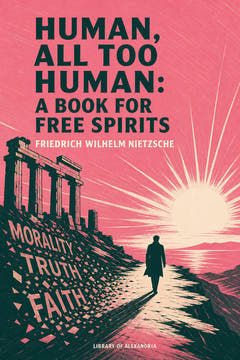
Free for 3 months
Get the full summary of Human, All Too Human: A Book for Free Spirits, free
- 200,000+ classics as eBooks, audiobooks and 15-minute summaries, and print and large print at cost
- Up to 5 readers in your home on one plan
Start freeNothing to pay today. USD 0.14 a day in the first year, then USD 0.27 a day.
In this part
Quick check
What does the speaker identify as the main source of error for someone seeking only knowledge?
Free for 3 months
Get the full summary of Human, All Too Human: A Book for Free Spirits, free
- 200,000+ classics as eBooks, audiobooks and 15-minute summaries, and print and large print at cost
- Up to 5 readers in your home on one plan
Start freeNothing to pay today. USD 0.14 a day in the first year, then USD 0.27 a day.

200,000+ classics to read, hear and hold
15-minute summaries today, eBooks and audiobooks as each book opens, and printed books, large print included, at cost.
Try 3 months free





