A reading guide
Political philosophy books
These political philosophy books explore what government is for, why people obey, and what freedom and justice mean. For students approaching these questions, start with On Liberty, then compare ancient accounts of political life with arguments about rights and revolution.
Updated



Where to start
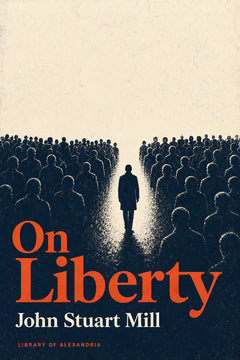 Start hereOn LibertyJohn Stuart Mill
Start with a concrete question: when may society restrict someone's freedom, and when does public opinion become a threat?
Read free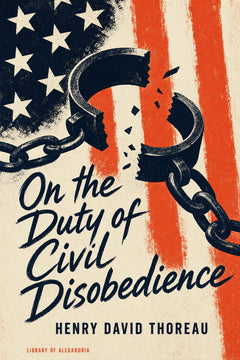 Another way inOn the Duty of Civil DisobedienceHenry David Thoreau
A focused argument rooted in a refused tax and a night in jail makes conscience and obedience feel immediate.
Read free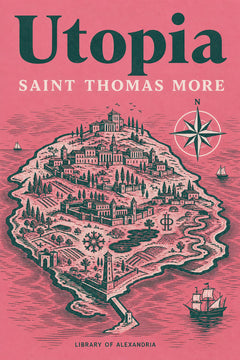
The books
Free to start one of the free gifts when you start
Ancient and medieval thinkers
| # | First published | Book | Kind | Read |
|---|---|---|---|---|
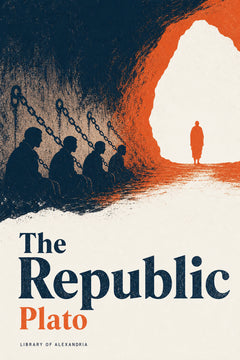
| 1 | 375 BC | The RepublicPlato Through an imagined city and its connection to the soul, Socrates investigates justice and the value of living justly. | Ancient text | Free to startRead free |
| 2 | 350 BC | Politics: A Treatise on GovernmentAristotle Aristotle compares forms of government and asks how political life can make a good life possible beyond safety and trade. | Ancient text | Free to startRead free |
| 3 | · | The Analects of Confucius (from the Chinese Classics)Confucius Sayings and conversations connect government with personal virtue, exploring how learning, family duties and honest conduct sustain social order. | Ancient text | Free to startRead free |


Early modern: state, rights and freedom
| # | First published | Book | Kind | Read |
|---|---|---|---|---|
| 1 | 1532 | The PrinceNiccolò Machiavelli Advice on gaining and keeping power turns government into a question of survival, force, deception and the limits of ordinary morality. | Non-fiction | Free to startRead free |
| 2 | 1651 | Leviathan by Thomas HobbesThomas Hobbes Hobbes approaches the state through human fears and conflicts, arguing that a common authority is needed to prevent violence. | Non-fiction | Free to startRead free |
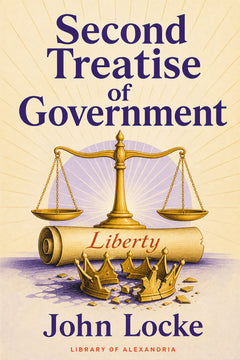
| 3 | 1689 | Second Treatise of GovernmentJohn Locke Consent rather than inherited rule anchors Locke's account of liberty, with political societies formed to protect lives, freedom and property. | Non-fiction | Free to startRead free |
| 4 | 1755 | A Discourse Upon the Origin and the Foundation of the Inequality Among MankindJean-Jacques Rousseau Rousseau investigates the state by tracing how property, dependence and organised society transform human differences into social inequality. | Non-fiction | Free to startRead free |
| 5 | 1792 | A Vindication of the Rights of WomanMary Wollstonecraft Education becomes a question of liberty as Wollstonecraft argues that women should develop reason and judgment rather than practise obedience. | Non-fiction | Free to startRead free |
| 6 | 1516 | UtopiaThomas More An imagined island without private property opens questions of justice through discussions of poverty, punishment and advising a king. | Non-fiction | Free to startRead free |
| 7 | 1625 | The Rights of War and PeaceHugo Grotius War remains subject to law in Grotius's examination of justified conflict, relations between peoples and moral limits on fighting. | Non-fiction | Free to startRead free |


The nineteenth century: liberty, reform and revolution
| # | First published | Book | Kind | Read |
|---|---|---|---|---|
| 1 | 1859 | On LibertyJohn Stuart Mill Mill examines liberty through limits on individual freedom, asking when preventing harm warrants interference by society or public opinion. | Non-fiction | Free to startRead free |
| 2 | 1848 | The Communist ManifestoKarl Marx; Friedrich Engels Class conflict gives questions of justice an economic focus as Marx and Engels examine capitalism's division between owners and wage earners. | Non-fiction | Free to startRead free |
| 3 | 1849 | On the Duty of Civil DisobedienceHenry David Thoreau Conscience challenges law in Thoreau's argument that individuals should refuse obedience when it makes them participate in injustice. | Non-fiction | Free to startRead free |
| 4 | 1869 | The Subjection of WomenJohn Stuart Mill Women's equality under law guides Mill's challenge to customs and restrictions that prevent women and men from developing their abilities. | Non-fiction | Free to startRead free |
| 5 | 1892 | The Conquest of BreadPeter Kropotkin Kropotkin questions the state through proposals for meeting everyone's needs with common ownership and voluntary cooperation rather than rulers. | Non-fiction | Free to startRead free |


Questions
What are the best political philosophy books to start with?
Start with On Liberty, The Republic or Second Treatise of Government, depending on the question that interests you. On Liberty examines individual freedom and interference by society. The Republic investigates justice through an imagined city. Second Treatise of Government explains political authority through consent and the protection of people's rights.
Which political philosophy book should I read first?
On Liberty is a useful first choice because it centres on a concrete question: when may society restrict individual freedom? Mill argues that preventing harm to others can justify restriction, rather than simply protecting someone from their own choices. Follow it with On the Duty of Civil Disobedience for a contrasting focus on conscience and obedience.
Who are the most important political philosophers?
A starting selection is Plato, Aristotle, Machiavelli, Hobbes, Locke, Rousseau and Mill. Their works here address justice, political life, power, authority, consent, inequality and freedom. Confucius adds an account of government grounded in personal virtue, while Wollstonecraft examines education and independence, and Marx and Engels analyse class conflict.
Which political philosophy books are short?
On the Duty of Civil Disobedience and The Communist Manifesto are short starting points, each taking about 1 hours. The former concentrates on conscience and resistance to unjust government. The latter argues that class conflict drives history and calls for workers to unite against capitalism.
What is the social contract?
The social contract is the idea that political authority can be justified through an agreement among the people who live under it. Second Treatise of Government offers a starting point through Locke's argument that authority rests on consent and must protect people's rights. Compare Leviathan by Thomas Hobbes for its argument that peace requires a strong common authority.
Updated
Read and hear all of them
Every book on this page, and 200,000+ more, as eBook, large-print eBook, audiobook and 15-minute summary, in 25 languages, and any book printed at cost as a paperback, hardcover or large print. 5 accounts for the price of one.








