A reading guide
Ancient Greek philosophy books
These ancient Greek philosophy books offer a reading path through Socratic questions, Plato, Aristotle and the later schools, for readers beginning the subject. Start with Apology, where Socrates explains his questioning before an Athenian jury.
Updated


Where to start
 Or tryThe EnchiridionEpictetus
Practical Stoic advice begins with a useful distinction between personal choices and events beyond control, keeping attention on daily conduct.
Read free

The books
Free to start one of the free gifts when you start
Socrates, Plato and Aristotle
| # | First published | Book | Kind | Read |
|---|---|---|---|---|
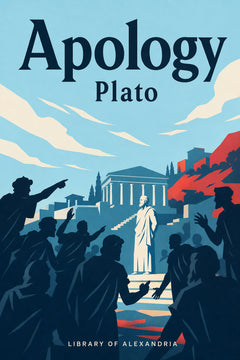
| 1 | 390 BC | ApologyPlato Socrates defends his conduct before an Athenian jury, explaining why he questions beliefs and acknowledges the limits of human wisdom. | Ancient text | Free to startRead free |
| 2 | 390 BC | CritoPlato A friend's escape plan turns a prison visit into an examination of whether saving one's life would be just. | Ancient text | Free to startRead free |
| 3 | 399 BC | EuthyphroPlato An encounter with a confident religious expert gives Socrates occasion to test what piety means and what makes actions pious. | Ancient text | Free to startRead free |
| 4 | 385 BC | MenoPlato The question of whether virtue can be taught leads Socrates and Meno towards definitions and the problem of searching for knowledge. | Ancient text | Free to startRead free |
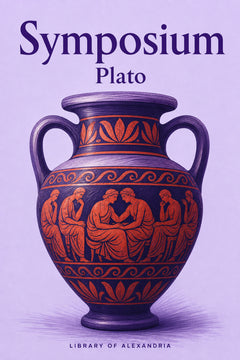
| 5 | 385 BC | SymposiumPlato Dinner guests take turns praising love, offering contrasting accounts of desire and its place in human life. | Ancient text | Free to startRead free |
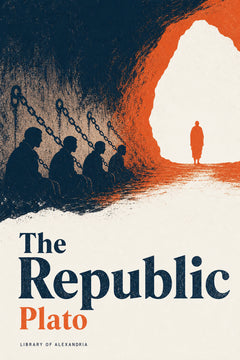
| 6 | 375 BC | The RepublicPlato Justice becomes a question about both cities and souls as Socrates and his companions imagine how a city might be ordered. | Ancient text | Free to startRead free |
| 7 | 340 BC | The Ethics of AristotleAristotle Aristotle examines happiness through character and action, showing how practice and sound judgment help people choose well. | Ancient text | Free to startRead free |
| 8 | 350 BC | On the SoulAristotle Plants, animals and human beings enter Aristotle's inquiry into what makes a body alive and how perception and thought work. | Ancient text | Free to startRead free |


The schools: Stoics, Epicureans and Neoplatonists
| # | First published | Book | Kind | Read |
|---|---|---|---|---|
| 1 | 125 | The EnchiridionEpictetus Stoic advice directs effort towards judgments and choices, distinguishing what depends on us from events and opinions beyond our control. | Ancient text | Free to startRead free |
| 2 | 170 | MeditationsMarcus Aurelius Private reflections on duty and self-control follow a Roman emperor's efforts to act reasonably and treat other people fairly. | Ancient text | Free to startRead free |
| 3 | 55 BC | On the Nature of ThingsTitus Lucretius Carus Lucretius explains nature through atoms and empty space, arguing that understanding the world can ease fears of gods and death. | Poems | Free to startRead free |
| 4 | 300 | Iamblichus' Life of PythagorasIamblichus Pythagoras's life and teachings become a model of philosophical conduct, connecting study, daily habits and care of the soul. | Ancient text | Free to startRead free |


Questions
What are the best ancient Greek philosophy books to start with?
Start with Apology for Socrates' defence of his questioning, then Crito for a concrete question about justice. Follow with Euthyphro and Meno before moving to The Republic and The Ethics of Aristotle. For practical advice alongside these discussions, choose The Enchiridion, which focuses on judgments, choices and what lies beyond control.
Which Plato dialogue should I read first?
Choose Euthyphro for a first dialogue: Socrates asks a religious expert to explain what makes actions pious. Their encounter centres on a clear question and the testing of proposed answers. Another starting point is Crito, where a friend's plan to rescue Socrates from prison raises the question of whether escape would be right.
Who were the most important ancient Greek philosophers?
Central figures include Socrates, Plato and Aristotle, followed by Epicurus, the Stoic founder Zeno of Citium, and the Neoplatonist Plotinus. This reading path begins with Plato's accounts of Socrates and Aristotle's inquiries into character and life. Its later selections extend the subject to Roman writers and subsequent philosophical traditions.
Which ancient Greek philosophy books are short?
Crito, Euthyphro and The Enchiridion are short starting points on this list. Crito considers whether Socrates should escape prison; Euthyphro examines piety; The Enchiridion offers Stoic guidance about control and choice. Other brief options are Ion, where Socrates questions a poetry performer's knowledge, and The Apology by Xenophon, an account of Socrates' defence.
What did Socrates write?
Socrates left no writings of his own. Accounts of his conversations and defence come from other writers, including Plato and Xenophon. Plato's Apology presents his defence before an Athenian jury, while Xenophon's The Memorabilia records conversations about conduct, relationships and responsibilities. In The Memorabilia, Socrates discusses how to live and act well.
Updated
Read and hear all of them
Every book on this page, and 200,000+ more, as eBook, large-print eBook, audiobook and 15-minute summary, in 25 languages, and any book printed at cost as a paperback, hardcover or large print. 5 accounts for the price of one.








