The Call of Cthulhu study guide
by H. P. Lovecraft · 1928 · the whole book: 0 h 49 min to read
The Call of Cthulhu follows an investigator who inherits Angell’s archive and traces links between dreams, cult worship, and an account of Cthulhu’s release, ending in fear of what he knows and the cult that still lives. Its main themes are dangerous knowledge, human smallness, and connected evidence.
The story in brief
The investigator inherits an archive assembled by Angell, an expert on ancient inscriptions, and follows its connections between dreams and cult worship. Wilcox creates a disturbing relief after a dream and reports further visions to Angell. Legrasse seeks help identifying an idol seized in a Louisiana swamp raid, while Webb recognizes similarities to a Greenland cult. Captured worshipers describe an ancient worldwide religion awaiting Cthulhu's release.
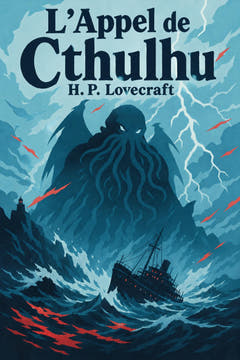
A newspaper report leads the investigator toward Johansen's account, which Johansen's wife supplies after her husband's unexplained death. The Emma's crew captures the Alert, explores a risen city, and accidentally releases Cthulhu. The being kills sailors, and Johansen rams it with the Alert, but it begins reforming. Johansen survives the pursuit, while the narrator ends fearing what he knows and the cult that still lives. Read the 15-minute summary.
Free for 3 months
Get the full summary of The Call of Cthulhu, free
- 200,000+ classics as eBooks, audiobooks and 15-minute summaries, and print and large print at cost
- Up to 5 readers in your home on one plan
Quick answers
What is The Call of Cthulhu about?
The Call of Cthulhu follows an investigator who inherits his uncle Angell's archive and traces connections between strange dreams and cult worship. His investigation leads to a sailor's account of Cthulhu's release from a risen ancient city.
Who is the main character in The Call of Cthulhu?
The main character is the narrator, an investigator whose uncle Angell collected evidence about dreams and cult activity. He follows the connections in Angell's archive, growing fearful as the evidence reveals a threat.
Who is Wilcox in The Call of Cthulhu?
Wilcox is a young sculptor who makes a disturbing relief after a dream and reports further visions to Angell. His artwork and descriptions convince the narrator that he is honest, making his dreams part of the investigation's evidence.
Does Johansen kill Cthulhu in The Call of Cthulhu?
Johansen rams Cthulhu with the captured Alert, but the being begins reforming rather than remaining destroyed. Johansen survives the pursuit and leaves a manuscript describing the encounter before his own unexplained death.
How does The Call of Cthulhu end?
The narrator ends in fear of what he has learned and of the cult that still lives. Johansen's account reveals that Cthulhu killed sailors and began reforming after Johansen rammed it with the Alert.
Where is The Call of Cthulhu set?
The story's settings include Providence, Rhode Island, West Greenland, and the swamps south of New Orleans, where evidence of cult activity emerges. Sydney, Oslo, and R’lyeh extend its reach, while the crew explores a risen ancient city.
What are the main themes of The Call of Cthulhu?
The main themes are dangerous knowledge, human smallness, and the connections between scattered pieces of evidence. The narrator's investigation makes the threat clearer, but understanding it offers no simple protection from danger.
Characters
Angell
Angell is an expert on ancient inscriptions who collects Wilcox's dreams alongside evidence from an earlier cult investigation. He is the narrator's uncle, and the suspicion that his death is murder makes his research seem dangerous.
Wilcox
Wilcox is a young sculptor whose disturbing dreams lead him to create a relief and report further visions to Angell. His descriptions and artwork convince the narrator of his honesty, making his dreams part of the evidence.
Legrasse
Legrasse is a New Orleans police inspector who seeks expert help identifying an idol seized during a swamp raid.
Webb
Webb is an anthropologist whose encounter with a Greenland cult helps him recognize similarities in Legrasse's evidence. He temporarily holds the captured image before his death, while his account provides another point of comparison.
Castro
Castro is an elderly prisoner who explains the cult's ancient history and its hopes for Cthulhu's return.
Johansen
Johansen is a Norwegian sailor who commands the captured Alert and survives Cthulhu's pursuit by ramming the being, which begins reforming. He leaves a manuscript before his unexplained death, preserving an account of the encounter.
Cthulhu
Its emergence, killing of sailors, and reformation after Johansen's attack turn the cult's account into a direct threat.
Themes
Dangerous knowledge
Angell's gathering of dream reports and cult evidence shows how investigation brings separate disturbances into a connected account. The narrator's suspicion about Angell's death and fear of his own knowledge suggest that understanding offers no simple protection from danger.
Skepticism and evidence
Legrasse's request for expert help and Webb's comparison show an effort to test disturbing evidence rather than merely accept it. Wilcox's artwork and descriptions also change the narrator's judgment, suggesting that belief develops through comparison and examination.
Human smallness
The worshipers' account of ancient beings arriving from the sky suggests powers beyond ordinary human experience or control.
Connected evidence
The newspaper report and Johansen's account extend that process, suggesting that the threat becomes clearer as scattered evidence comes together.
Symbols
Clay bas-relief
Wilcox's clay relief gives a disturbing dream a physical form. It works as a bridge between private visions and evidence that another person can examine.
Stone idols
The captured idol connects Legrasse's investigation with the cult's account of Cthulhu. Its preservation suggests that a physical object can carry disturbing evidence beyond the encounter that first brings it to attention.
Johansen's manuscript
Its passage to the narrator works as an image of knowledge surviving the person who experiences its danger.
Famous lines explained
The narrator, Part 1. The narrator frames the archive's connected evidence by presenting incomplete understanding as a mercy. The line suggests that joining separate discoveries may threaten rather than reassure.
The narrator, Part 2. The narrator speaks after the investigation reaches Johansen's account. His acknowledgment of the surviving cult shows that discovery leaves him afraid rather than secure.
Setting
The settings include Providence, Rhode Island, West Greenland, and the swamps south of New Orleans, where the investigation gathers evidence of cult activity. Sydney, Oslo, and R’lyeh extend the geographical reach, while the crew's exploration of a risen ancient city brings the threat into direct experience.
Questions for discussion
- Does the narrator's view of incomplete understanding as merciful seem convincing, or does it undervalue knowledge?
- How much should Wilcox's apparent honesty establish about the truth of his dreams?
- Does Johansen's attack suggest human resourcefulness, human helplessness, or both?
- How does Webb's comparison change the significance of Legrasse's discovery?
- How should readers distinguish the narrator's reasonable caution from fear-driven suspicion?
Essay topics
- Evidence. Examine how dreams, investigative records, and Johansen's manuscript build a connected account of the threat.
- Human limits. Discuss how Johansen's escape combines effective human action with evidence of human limits.
- Physical objects. Compare the relief and the seized idol as objects that turn disturbing experiences into evidence.
Quick quiz
Question 1 of 2Score 0
What makes Webb’s account especially important to Legrasse?
How does Johansen escape the pursuing Cthulhu?
Free for 3 months
Get the full summary of The Call of Cthulhu, free
- 200,000+ classics as eBooks, audiobooks and 15-minute summaries, and print and large print at cost
- Up to 5 readers in your home on one plan

15-minute summaries today, eBooks and audiobooks as each book opens, and printed books, large print included, at cost.
Try 3 months freeMore study guides: Beauty and the Beast · The Raven · The Fall of the House of Usher · All study guides





