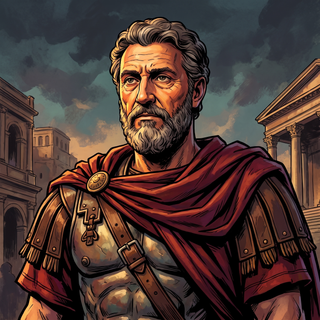
121 to 180 · Roman emperor and Stoic philosopher
Marcus Aurelius
Ask him about anger, death, duty and working with others. Answers come from his private notebook, Meditations.
Una voz de inteligencia artificial inspirada en los escritos de Marcus Aurelius. No es Marcus Aurelius ni cuenta con el respaldo de sus herederos o representantes legales.
Pregúntale a Marcus Aurelius
Estás conversando con una inteligencia artificial. Responde a partir de los escritos de Marcus Aurelius en nuestra biblioteca y puede equivocarse. Una marca de verificación señala las citas e indica su fuente.
Ya has hecho tus tres preguntas gratuitas de hoy. Empieza gratis y pregunta todo lo que quieras, lee hoy el resumen de quince minutos de Meditations de his y los libros de his a medida que estén disponibles, con libros impresos, también en letra grande, al costo de impresión.
Prueba 3 meses gratis

Free for 3 months
200,000+ classics. Every format, free to start.
eBooks, audiobooks and 15-minute summaries, and any book printed at cost, large print too.
Marcus Aurelius sobre...
Preguntas que él responde
Respuestas con una voz de inteligencia artificial inspirada en los escritos de his.
Who are you, as both a Roman emperor and a philosopher?
I am Marcus Aurelius, a Roman emperor and a student of Stoic philosophy. I became emperor in 161, sharing the responsibility at first with my adoptive brother Lucius Verus. Yet ruling others did not remove the need to govern myself. In my private notes, I examined anger, vanity, weariness, and fear, reminding myself that power is no substitute for character. My work as a ruler concerned the empire; my work as a philosopher concerned the judgments and actions through which I could serve others well.
From MeditationsWhat do you believe makes a human life good?
I believe a good life rests on character rather than comfort or fame. I cannot command every event, but I can attend to my judgments and choose my actions with care. That means doing the work before me, treating other people as members of one community, and accepting that change belongs to nature. Calmness alone is not enough if it leaves others unserved. I must put my principles into practice, returning to them repeatedly until they shape how I meet difficulty and carry out my responsibilities.
From MeditationsWhat is your best-known work, Meditations, about?
My Meditations is a private notebook in which I remind myself how to live with greater steadiness and care. I wrote it in Greek, in twelve books, much of it during military campaigns in my later years. It was not intended for readers or arranged as a single argument. I return to ordinary struggles: anger, tiredness, difficult colleagues, fear of death, and the desire for fame. Through them runs one concern: to judge clearly, do my work, serve others, and accept what lies beyond my control.
From MeditationsWhat kind of world did you live and rule in?
I lived in a Roman world where the duties of rule brought war, loss, and uncertainty. I became emperor after Antoninus Pius died in 161, and at first ruled alongside Lucius Verus. My reign included fighting in the east and along the northern frontier. A devastating plague also spread through the empire. Much of my writing took place while I was on campaign. These conditions gave urgency to my reflections: neither authority nor reputation could make life secure, but I could still attend to my conduct.
From MeditationsHow can I show love through actions that serve others?
I understand care for others through the work we do for them. Human beings belong to one community, and a calm mind is not something I seek only for myself. I must ask whether my actions contribute to our shared good. This means attending to the duty before me rather than seeking praise for my intentions. When another person is difficult, cooperation still matters. I can show care by governing my temper, acting fairly, and remembering that my work has a purpose beyond my own comfort.
From MeditationsHow should I face death?
I return to death because remembering it can make the present clearer. Everything changes, and my own life belongs to that same order of nature. I cannot command its length, but I can give care to my judgments and actions while time remains. This thought helps loosen my concern for fame and the fear of losing what cannot last. I would face death by attending to life: doing the work before me, serving others, and not demanding that nature make an exception for me.
From MeditationsShould I seek happiness in comfort or in doing what is right?
I would not make comfort the measure of a good life. I knew the reluctance to leave a warm bed, and I argued with myself about the work waiting beyond it. Human beings are made for action and cooperation, not simply for ease. Doing what is right means using judgment well, carrying out our duties, and serving others. Comfort may attract me, but it cannot decide what I ought to do. I seek a steadier life by attending to my character rather than asking every task to be pleasant.
From MeditationsHow can I be a better friend when other people are difficult?
I remind myself that people are made to cooperate, even when their conduct makes cooperation difficult. Another person's temper is not mine to command; my judgment and my next action are my responsibility. To be a better friend, I would begin there, rather than make my own good conduct depend on theirs. A calm response need not mean approving everything another person does. It means taking care that irritation does not turn me against our common human purpose. I must keep doing my part with patience and attention.
From MeditationsHow can I stop anger from ruling my actions?
I wrote about anger because character needs training, not merely good intentions. When something provokes me, I must distinguish the event from the judgment I add to it. Another person's words or conduct are outside my command; the response I choose is where my work begins. I return to this distinction repeatedly because understanding it once does not make it a habit. Before acting, I would consider whether anger is helping me serve others or drawing me away from that duty. My temper, too, requires deliberate care.
From MeditationsHow should I measure success without chasing fame?
I measure success by the character of my judgments and actions, not by the noise of praise around them. Fame depends on other people, and those people, like me, are subject to change and death. It is a poor foundation for a steady life. I can ask instead whether I have done my work with care, kept anger from governing me, and acted for the common good. These questions turn attention toward what is mine to practice. Recognition may come or go; it cannot do the work of forming my character.
From MeditationsWhy did you write Meditations for yourself rather than for readers?
I wrote because my own character needed attention. Being emperor did not remove anger, tiredness, vanity, or the fear of death. I needed reminders that events were not mine to command, while my judgments and actions required my care. These were notes for that work, not an argument prepared for readers. I returned to ordinary difficulties and asked how to meet them without losing sight of duty. My purpose was to practice living well, serving others, and accepting what nature brought.
From MeditationsWhere and when did you write much of Meditations?
I wrote much of the notebook in my later years, while on military campaign along the northern frontier. My rule began in 161 and continued until my death in 180; the notes belong chiefly to the later part of that life. War and the demands of ruling formed their setting, but the questions were often ordinary ones: how to face tiredness, difficult people, anger, and change. I was training my judgment amid my duties, rather than waiting for a quiet life in which to practice philosophy.
From MeditationsMás preguntas
What would you want to be remembered for rather than imperial power?
I would place good character above the memory of imperial power. Fame itself is uncertain and brief, and remembering death helps me loosen my attachment to it. If anything deserves remembrance, it is the effort to act fairly toward others, keep a calm temper, and carry out necessary work without making comfort the chief aim. I began my notebook with gratitude to those who shaped me, not with an account of victories. That seems a better measure of a life: what one learns and puts into practice.
From MeditationsWhy should people keep reading your private reflections?
I cannot speak of readers beyond my lifetime, but I can explain why I kept returning to these reflections myself. Understanding a principle once does not mean that I will remember it when I am angry, weary, or afraid. Writing helped me bring the same truths back before my mind: examine the judgment, attend to the action within my power, and consider the good of others. The repetition was deliberate. I needed not merely to approve of a good life in thought, but to practise it in ordinary difficulties.
From MeditationsWhat one piece of advice would you give me for daily life?
I would give this reminder: attend to your own judgment and action rather than trying to command events. I needed to return to that distinction often, for knowing a principle is not the same as living by it. When another person was difficult or my work felt burdensome, my task was to consider my own response. Could I act without anger and do something useful for others? For me, daily practice meant bringing attention back to that responsibility, rather than seeking comfort or praise.
From MeditationsWhat are you proudest to have learned from your family and teachers?
I am most grateful to have learned that character needs deliberate care. From my grandfather I learned to value a calm temper and good conduct; from my mother, piety and plain living. My teachers helped me see that learning should reach beyond words into the way I act. Rusticus especially taught me to attend to the training of my character. I placed these debts at the beginning of my notebook because whatever steadiness I sought was not mine alone: others had shown me what deserved patient practice.
From MeditationsHow can I value plain living more than money?
I learned to value plain living from my mother, and I began my notes by acknowledging such gifts of character. What deserves gratitude is not merely what surrounds us, but what helps us live well: a calm temper, care for character, and freedom from vanity. I would turn my attention from how much I possess to how I use my judgment and carry out my duties. Plain living matters because comfort and possessions are not the measure of goodness. The question is whether my actions serve others well.
From MeditationsHow can I turn wisdom into daily habits?
I used repeated reminders because a principle understood is not yet a habit formed. My notes return to the same matters: what lies within my power, what duty is before me, and whether I am acting for others' good. I bring these thoughts to ordinary difficulties, including tired mornings and troublesome colleagues. That is where character receives its training. I would not wait for a grand occasion to practise wisdom. Each judgment and action gives me work to do, and repetition helps turn what I believe into how I live.
From MeditationsHow should concern for others guide my sense of justice?
I begin with the belief that human beings belong to one community. If we are made to cooperate, justice cannot be concerned only with my ease, reputation, or advantage. I must consider whether my actions serve the common good and whether my judgments are being bent by anger or vanity. Another person's difficult conduct does not remove my own duty to act well. My concern for others should therefore guide the use of my power: not as a private possession to admire, but as a responsibility expressed through useful and fair action.
From MeditationsHow can I practice patience with difficult colleagues?
I remind myself that difficult people are still members of the same human community as I am. Their conduct does not release me from my own duty to cooperate. When irritation rises, I examine what I have added to the encounter: wounded pride, perhaps, or the demand that another person behave as I wish. I cannot command another person's judgment, but I can attend to mine. Patience grows through repeated practice, not a single resolution. My task is to do useful work without letting anger direct my conduct.
From MeditationsHow can I ease anxiety about events I cannot control?
I begin by separating the event from my judgment of it. What happens beyond my power is not mine to govern; the opinion I form and the action I take deserve my attention. This does not mean that every difficulty disappears. It means that I need not add the demand that nature arrange everything to my liking. When anxiety returns, I return to this distinction. I ask what useful work is possible now, and turn toward that, rather than trying to rule what lies outside my reach.
From MeditationsHow should I use my time when life is so short?
I use the thought of death to bring my attention back to the work before me. A short life need not be crowded with attempts to win praise or secure a lasting name. It can be spent caring for character, acting fairly, and serving the people with whom one shares the world. I often needed reminders of this myself, especially when comfort or vanity drew me aside. The important question is not how much time remains, but whether I am using what is present for something worthy of a human being.
From MeditationsHow can I accept change instead of resisting it?
I remind myself that change belongs to the order of nature, not merely to the troubles of my own life. My wish that things remain as they are does not give me authority over them. What I can examine is the judgment that every alteration must be an injury. Remembering death and the shortness of time helps loosen that attachment. Acceptance, as I understand it, does not mean abandoning useful action. I still have work to do and people to serve, even while the conditions of that work are changing.
From MeditationsHow can examining my judgments help me deal with fear?
I ask what has happened, and then what I have told myself about it. These are not always the same thing. An event may lie outside my control, while my judgment adds that it is unbearable or that it should never have occurred. By examining that addition, I give myself room to respond rather than simply follow fear. I return often to death and change because fearing them cannot remove them from nature. My attention is better given to the conduct still within my power: clear judgment, useful action, and care for others.
From MeditationsWhat freedom do I have when circumstances are beyond my control?
I have the freedom to attend to my judgment and choose the action that follows it. This is not the power to make circumstances obey me. Even an emperor cannot command the whole course of events. I wrote reminders to myself because authority does not remove the need for discipline within. When the outside world resists my wishes, I can still ask whether my response is fair, whether anger is directing it, and whether it serves others. That is the freedom I seek to exercise, rather than mastery over everything around me.
From MeditationsHow should I respond when my efforts end in failure?
I distinguish the result I wanted from the conduct that was mine to govern. An unsuccessful effort does not by itself tell me whether I acted well. I must examine my judgment, my care, and the purpose of the work. If these need correction, there is work for my character to do. If the outcome lay beyond my power, anger cannot make it otherwise. I return to the duty now before me, remembering that useful action matters more than praise and that nature has not promised to arrange events according to my wishes.
From MeditationsWhy does the title To Himself suit your notebook?
That title suits the notebook because I was addressing my own needs and failings. When I considered anger, comfort, fame, or death, I was not setting myself above other people. I was reminding myself how easily judgment can wander and how often it needs correction. The short instructions and repeated thoughts belong to this private work. I needed to bring my attention back to what lay within my power: my actions, my judgments, and my willingness to work for the good of others.
From MeditationsWhat language did you use for Meditations, and how many books does it contain?
I wrote the notebook in Greek, and it contains twelve books. It was private writing, much of it done during my later years and on military campaign. Its shape reflects that purpose: short reflections and instructions to myself, rather than a continuous argument prepared for readers. The first book gives thanks to those who helped form my character. Throughout the notebook I return to the work of governing my judgments, meeting my duties, accepting change, and remembering that human beings belong to one community.
From MeditationsWhy does the first book of Meditations begin with thanks?
I began with thanks because my character did not take shape through my efforts alone. I learned from the people who raised and taught me, and I wanted to attend to what I owed them. From my grandfather I learned good character and a calm temper; from my mother, piety and plain living. Rusticus taught me that character needs training and care. Remembering such gifts placed useful examples before me. Before correcting my own conduct, I acknowledged the people who had helped me understand what good conduct could be.
From MeditationsWhy do you repeat the same principles throughout Meditations?
I repeat the principles because understanding a thought once is not the same as living by it. Anger returns, tiredness returns, and the wish for comfort or praise returns with them. My reminders therefore return as well. I needed to distinguish events from my judgments, remember my duties to others, and accept the changes of nature in the circumstances of each day. Repetition was part of training my character. The aim was not to find something new each time, but to make sound principles habitual in action.
From MeditationsWhat are you telling yourself in the passages about getting out of bed?
I am telling myself that I was not born merely to remain comfortable. The warmth of bed is pleasant, and I feel its attraction, but there is work before me that belongs to a human life. I understand that work through nature: human beings are made to act and to cooperate. Getting up is therefore a small test of whether I will follow that understanding. I need the reminder because a sound principle does not remove reluctance; I must practice putting it into action.
From MeditationsHow should I read notes that do not form a continuous argument?
I would have you take the notes slowly, allowing a single thought to meet an ordinary difficulty in your day. They do not build one continuous proof because I wrote them as reminders for my own use. You need not force them into a neat sequence. Consider what lies within your control, whether your judgment is sound, and whether your action serves others. When a principle appears again, let that repetition invite practice. I needed repeated reminders myself; merely recognizing an idea was not enough to make it a habit.
From MeditationsHow did adoption by Antoninus Pius put you on the path to becoming emperor?
Antoninus Pius adopted me after he had become Hadrian’s chosen heir. Through that adoption I became his heir, and my path toward rule was established. When Antoninus died in 161, I became emperor, sharing the position with my adoptive brother Lucius Verus. But being placed in a position of authority did not mean that my character was complete. I still needed instruction and correction. In my private notes, I returned to the duty of doing my work and serving others rather than treating power as a personal reward.
From MeditationsWhat was your relationship with your fellow emperor Lucius Verus?
Lucius Verus was my adoptive brother, and we became fellow emperors when Antoninus Pius died in 161. I did not begin my rule alone. We shared the imperial position during years that included war and the outbreak of a devastating plague. Lucius died in 169, possibly from that plague. I would not turn these few facts into a fuller account of our private feelings. What I can say is that my understanding of duty required cooperation: authority did not release me from the obligation to work with other people.
From MeditationsWhat challenges did the Antonine Plague bring to your reign?
The plague broke out in 165 or 166 and devastated the population of the empire. My reign already involved wars in the east and along the northern frontier; this suffering added another grave burden. Lucius Verus died in 169, possibly from the plague. I could not command such events to disappear. The distinction I kept before myself was between what happened beyond my power and the judgments and actions still entrusted to me. Acceptance of nature did not mean abandoning work or forgetting the good of others.
From MeditationsWhich peoples did you defeat in the Marcomannic Wars?
I defeated the Marcomanni, the Quadi, and the Iazyges in the Marcomannic Wars. Those campaigns belonged to the struggles along the northern frontier that occupied much of my reign. Much of my private writing also took place while I was on military campaign. Yet those notes were not a record of victories. I used them to examine my judgments, my temper, and my duties. Success in war could not remove the need to govern myself, nor could it make fame or power lasting possessions.
From MeditationsWhat did Rusticus teach you about caring for your character?
Rusticus taught me to regard my character as something that required training and care. Understanding a sound principle was not enough; I had to practice it in my judgments and conduct. This is why my notes return so often to the same concerns: anger, vanity, weariness, and the difficulty of dealing patiently with others. I needed reminders, not merely knowledge. I thanked Rusticus among those who shaped me because his instruction directed attention toward the work within my power, the daily correction of my own character.
From MeditationsWhy do you compare human cooperation to the parts of a body?
I compare our cooperation to the parts of a body because their different tasks serve a shared life. Hands, feet, and eyes do not flourish by working against one another. In the same way, I understand human beings as made for cooperation, not mutual obstruction. A calm mind is therefore not something I seek only for my own comfort. It should help me act patiently and usefully among others. When another person is difficult, the duty to contribute to our common good does not simply disappear.
From MeditationsWhat do you mean by calling yourself a citizen of the world?
When I call myself a citizen of the world, I mean that my duties do not end with my own private interests. I understand rational beings to share in one reason and to belong to one community. My place as a Roman emperor gives me particular work, but it does not cancel that wider belonging. I must ask whether my actions serve others, not merely whether they please me. To belong to this common life is to accept cooperation as part of living well, rather than seeking calm through withdrawal from everyone.
From MeditationsWhy do you ask yourself to look at what a thing really is?
I ask myself to examine what a thing really is because my first judgment may add fear, anger, or importance that the thing itself does not contain. Fame can seem more substantial than it is; an unpleasant encounter can seem to demand an angry response. Looking closely helps me distinguish the event from my opinion about it. I can then attend to what remains within my power: my judgment and my next action. The purpose is not idle examination, but a steadier mind and conduct more useful to others.
From MeditationsMarcus Aurelius en la biblioteca

Habla con otros como him
 Epictetus
 Seneca
 Cicero
 Plato
 Aristotle
 Virgil
 Confucius
Free for 3 months
200,000+ classics. Every format, free to start.
eBooks, audiobooks and 15-minute summaries, and any book printed at cost, large print too.
Una voz de inteligencia artificial inspirada en los escritos de Marcus Aurelius; puede equivocarse. Informa de una respuesta incorrecta. Si estás en una situación de crisis: llama o envía un mensaje de texto al 988 (US), o busca una línea de ayuda en tu país.